
Is your ceiling fan spinning slowly even when it is set to the highest speed?
The problem may involve an internal fan component, the speed controller or the electrical supply to the fan point. Basic checks can help determine whether the fan needs to be replaced or whether the related wiring and electrical connections require attention.
📲 Planning to replace an old ceiling fan? WhatsApp us for new fan installation services.
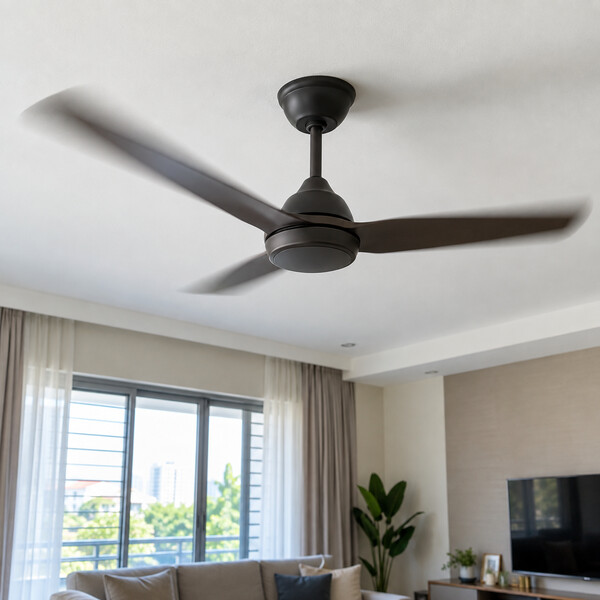
Why Is the Ceiling Fan Spinning Slowly?
A fan that gradually becomes slower does not necessarily indicate a problem with the home wiring. In many cases, the fault may involve the fan itself or its speed-control components.
Possible causes include:
- A weak fan capacitor.
- A problem with the fan motor.
- A faulty regulator or speed controller.
- Dust and dirt affecting the fan’s movement.
- A loose connection at the fan point.
- A problem with the switch or related wiring.
- An unsuitable electrical supply at the fan point.
The actual cause should be identified before deciding whether to replace the fan or inspect the electrical point.
Can a Weak Capacitor Make the Fan Spin Slowly?
The capacitor helps the fan motor operate and reach the required speed. When the capacitor becomes weak, the fan may continue to rotate but at a noticeably slower speed.
The fan may also take longer to start or remain slow at every speed setting.
A capacitor fault is an internal appliance problem. Kristal Maya does not repair capacitors, fan motors or electronic circuit boards. If the fan is no longer suitable for use, we can remove the old unit and install a new ceiling fan.
Fan Motor or Internal Component Problems
An old, overheated or damaged motor may cause the fan to lose speed. Some modern ceiling fans also use electronic control boards, remote-control receivers and other internal components that differ from conventional fans.
If the problem involves an internal component, the fan may need to be referred to the manufacturer’s service centre. Replacing the unit may be considered when repair is unavailable or no longer worthwhile.
A new ceiling fan can be installed at the existing point after the electrical point and mounting location have been checked.
Can the Fan Regulator Cause Slow Speed?
Yes. A ceiling fan controlled by a wall regulator may rotate slowly if the regulator is faulty or no longer controls the speed correctly.
For remote-controlled fans, the problem may involve the remote control, receiver or electronic board inside the fan. Check the selected speed setting and remote-control batteries before assuming that the wiring is faulty.
If the regulator or electrical point needs to be changed together with the new fan installation, the required work will depend on the fan type and existing installation.
Can a Wiring Problem Make the Fan Spin Slowly?
A wiring problem may be considered if there is a loose connection at the fan point, a faulty switch or an unstable electrical supply. However, slow fan speed alone is not enough to confirm that the home wiring is damaged.
Look for other symptoms such as:
- Lights on the same circuit also flicker or become dim.
- The fan stops and starts again unexpectedly.
- The fan switch feels hot or loose.
- There is an unusual sound from the switch or fan point.
- The fan only operates when the switch is moved.
- There is a burning smell or visible discolouration.
If the installation location does not have an electrical point or the existing point needs to be relocated, refer to our fan wiring service for a new or additional fan point.
📲 Need a new fan point or ceiling fan installation? WhatsApp us for fan wiring and installation services.
What Can You Check First?
You can make a few basic observations without opening the fan, switch or electrical connections:
- Make sure the correct speed has been selected.
- Replace the remote-control batteries if applicable.
- Check whether the fan is slow at every speed setting.
- Listen for unusual sounds from the fan motor.
- Observe whether the fan motor becomes excessively hot.
- Check whether the fan is wobbling or unbalanced.
- Notice whether nearby lights or electrical equipment are also affected.
Do not open the fan motor, ceiling canopy or electrical connections unless you have the knowledge and qualifications required to carry out the work safely.
When Should an Old Ceiling Fan Be Replaced?
Replacement may be considered when the fan is old, becoming increasingly slow, making unusual noises or developing an internal fault that is no longer economical to repair.
A new fan may also be more suitable when replacement parts are unavailable, the motor overheats or the same problem keeps returning after the fan has been referred for repair.
For unit replacement, see our light and fan installation service for homes, shops and offices.
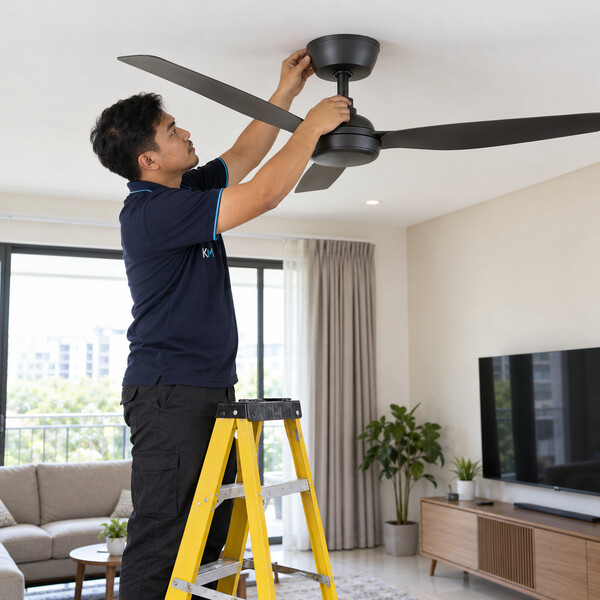
What Is Checked Before Installing a New Fan?
Before a new fan is installed, the electrical point and mounting location should be checked to confirm that they are suitable for the new unit.
The relevant checks may include:
- The location and condition of the fan point.
- The mounting bracket or support.
- The condition of the ceiling.
- The switch and controller being used.
- The type of fan and installation method.
- Additional wiring requirements if a point is not available.
If the symptoms indicate a problem with the fan point or electrical system rather than an internal fan fault, our electrical troubleshooting service can identify the condition of the related wiring.
Do We Provide Ceiling Fan Repair?
No. We do not repair fan motors, capacitors, electronic boards, remote-control receivers or other internal fan components.
Our services focus on:
- Removing an old ceiling fan.
- Installing a new ceiling or wall fan.
- Replacing an old fan with a new unit.
- Installing new fan wiring and electrical points.
- Relocating a fan point when required.
- Checking electrical connections related to the installation.
Frequently Asked Questions
Why is the fan still slow at the highest setting?
The problem may involve the capacitor, motor, regulator, controller or electrical supply to the fan point. The affected area should be identified before deciding what action is required.
Does a slow ceiling fan mean the home wiring is faulty?
Not necessarily. An internal fan fault is more likely if only one fan is affected and the rest of the electrical system operates normally.
Does Kristal Maya repair fan capacitors or motors?
No. We do not repair internal fan components. We provide fan installation, replacement and fan-point wiring services.
Can a new fan be installed at an existing point?
Yes, subject to the condition of the electrical point, mounting support, ceiling and suitability of the new fan.
Planning to Replace an Old Ceiling Fan?
If an old ceiling fan is becoming slower or is no longer suitable for use, it can be removed and replaced with a new unit. The related electrical point and wiring can be checked before installation.
📲 Need a new ceiling fan installed? WhatsApp us for fan installation services.