
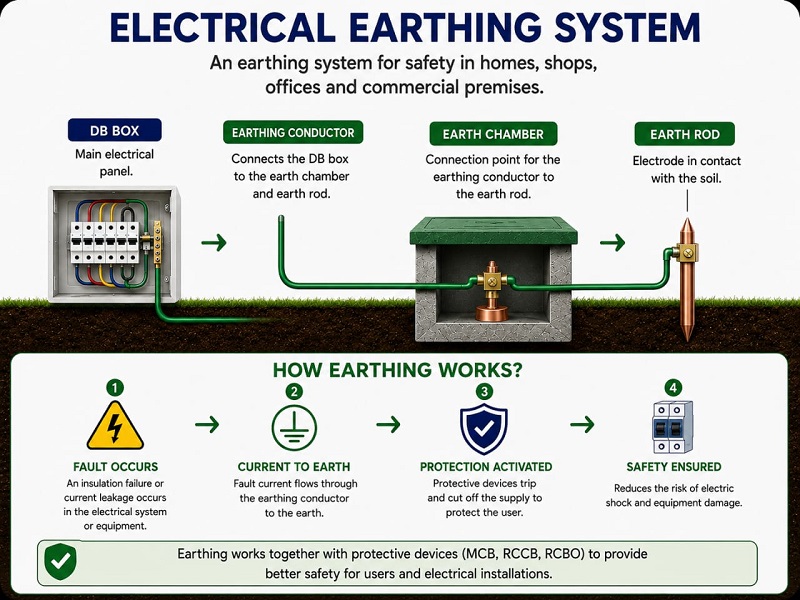
Electrical earthing, also known as an earthing or grounding system, is an important part of electrical safety in homes, shops, offices and commercial premises.
In general, an earthing system provides a connection between certain parts of an electrical installation and the earth. This helps provide a path for fault or leakage current so that the electrical protection system can operate effectively.
Electrical earthing is not simply about installing an earth rod. It involves several components that need to be correctly connected and tested as part of the overall electrical protection system.
What Is Electrical Earthing?
Electrical earthing generally refers to connecting certain parts of an electrical installation to the general mass of earth.
Under certain fault conditions, the earthing system provides a path for fault current to flow to earth and helps protective devices operate as intended.
Why Is an Electrical Earthing System Important?
An earthing system forms part of the protection measures used in an electrical installation.
Important functions of electrical earthing include:
- Providing a path for fault current to flow to earth
- Helping electrical protective devices operate effectively
- Reducing the risk of dangerous voltage on exposed metal parts
- Helping protect users during certain electrical fault conditions
- Supporting the overall safety of the electrical installation
Earthing works together with other protective measures and should not be considered the only form of electrical protection.
How Does Electrical Earthing Work?
Under normal conditions, exposed metal parts of electrical equipment should not carry a dangerous voltage.
If an insulation fault causes a live conductor to come into contact with an earthed metal part, fault current can flow through the earthing path.
This allows the relevant protective device to respond to the fault condition and disconnect the electrical supply according to the protection design.
For this reason, effective earthing does not depend only on the presence of an earth rod. The complete earthing path and associated protection system need to be in suitable condition.
Main Components of an Electrical Earthing System
An electrical earthing system can involve several interconnected components.
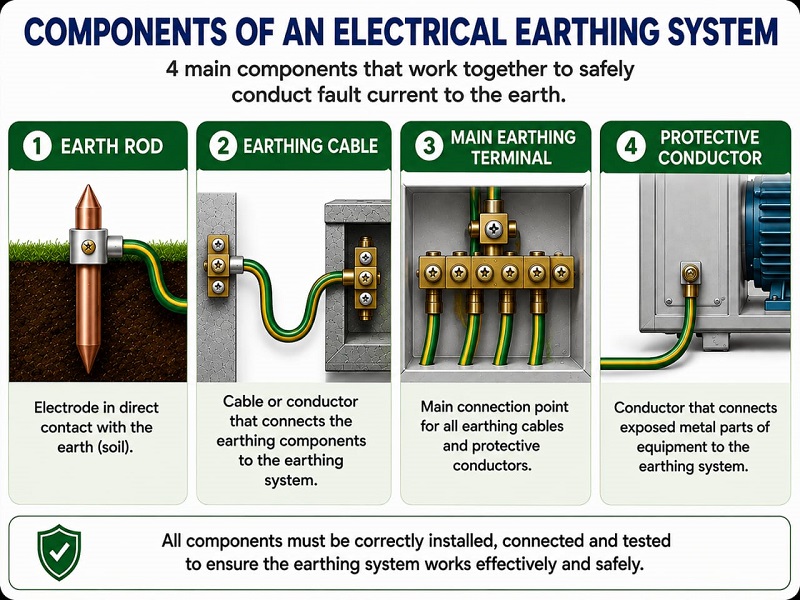
Common components include:
- Earth electrode / earth rod – an electrode that provides electrical contact with the earth
- Earthing conductor – a conductor forming part of the connection to the earthing system
- Main earthing terminal – the main connection point for the relevant earthing conductors
- Protective conductor – a conductor that connects relevant exposed conductive parts to the earthing system
The actual arrangement depends on the electricity supply system and electrical installation design.
Earth Rod in an Earthing System
An earth rod or earth electrode is one of the components that may be used to establish electrical contact with the earth.
For homes and other premises, the type of earth electrode and earthing arrangement used needs to be appropriate for the supply system and installation design.
Installing an earth rod alone does not guarantee that the earthing system is working correctly. Connections, conductors and the overall condition of the system need to be properly inspected and tested.
System Earthing and Equipment Earthing
The term earthing can refer to different functions within an electrical system.
System earthing generally relates to earthing a point within the electrical system for operational and protection purposes.
Equipment earthing relates to connecting exposed conductive parts of electrical equipment to the earthing system for protection.
Both are related to electrical safety and system operation, but they perform different functions within an installation.
Is an RCCB the Same as Earthing?
No. An RCCB and an earthing system are not the same thing.
Earthing provides the relevant grounding path and connections, while an RCCB is a protective device that detects residual current and can disconnect the supply when the required conditions occur.
Both are part of electrical protection but perform different functions.
To understand how RCCB differs from other protective devices, read our guide on MCB vs RCCB vs RCBO.
When Should an Earthing System Be Checked?
The condition of an earthing system cannot be confirmed simply by looking at the earth rod or earthing conductor.
An inspection may be appropriate when:
- The electrical installation is old and the condition of the earthing system is unknown
- Earthing connections appear damaged, loose or corroded
- Major renovation or electrical modification work has been carried out
- There are concerns about the effectiveness of the electrical protection system
- Electrical testing indicates that further investigation is required
Suitable testing methods and equipment are required to properly assess the condition and effectiveness of an earthing system.
Electrical Earthing for Homes, Shops, Offices and Commercial Premises
The basic principles of electrical earthing apply to many types of electrical installations, not only residential properties.
Homes, shops, offices and commercial premises can have different earthing requirements depending on the type of electricity supply, size of the installation, connected equipment and electrical system design.
The earthing arrangement should therefore be assessed according to the actual installation rather than assuming one configuration is suitable for every premises.
Do Not Modify Earthing Connections Without Proper Assessment
The earthing system is directly related to the protection of an electrical installation. A connection that appears simple may not necessarily be suitable from a design or safety perspective.
Avoid changing earth connections, adding earth rods or modifying protection arrangements without understanding the actual electrical system configuration.
For electrical wiring and protection work, see our electrical wiring services.
FAQ
What is the main function of electrical earthing?
Electrical earthing provides a connection to earth and a path for fault current, helping the electrical protection system operate effectively under certain fault conditions.
Does every premises have an earth rod?
An earth electrode such as an earth rod may form part of an electrical earthing system. The type and arrangement depend on the electricity supply system and the design of the installation.
Can an RCCB replace electrical earthing?
No. An RCCB and an earthing system perform different functions and should not be considered replacements for each other.
How do I know if an earthing system is still effective?
The condition of an earthing system cannot be confirmed through visual inspection alone. Appropriate inspection and electrical testing are required to assess its effectiveness.
Need Electrical Earthing Services?
If the condition of the earthing system is unknown, connections are damaged or the installation requires testing, the work can be assessed according to the actual condition of the premises.
Learn more about our electrical earthing service for earthing system installation, testing and repairs.
📲 Need electrical earthing services? WhatsApp us now.