
MCB ratings such as 6A, 10A, 16A, 20A, 32A and 40A indicate the nominal current rating of a Miniature Circuit Breaker.
These numbers are not simply a measure of MCB size or “strength”. The MCB rating needs to suit the circuit design, cable capacity, type of load and overall protection arrangement.
An MCB with a rating that is too low may cause frequent tripping, while a rating that is too high may result in the cable not receiving the intended overcurrent protection.
What Does an MCB Rating Mean?
MCB stands for Miniature Circuit Breaker. Ratings such as 6A, 10A, 16A or 20A refer to the nominal current rating of the device.
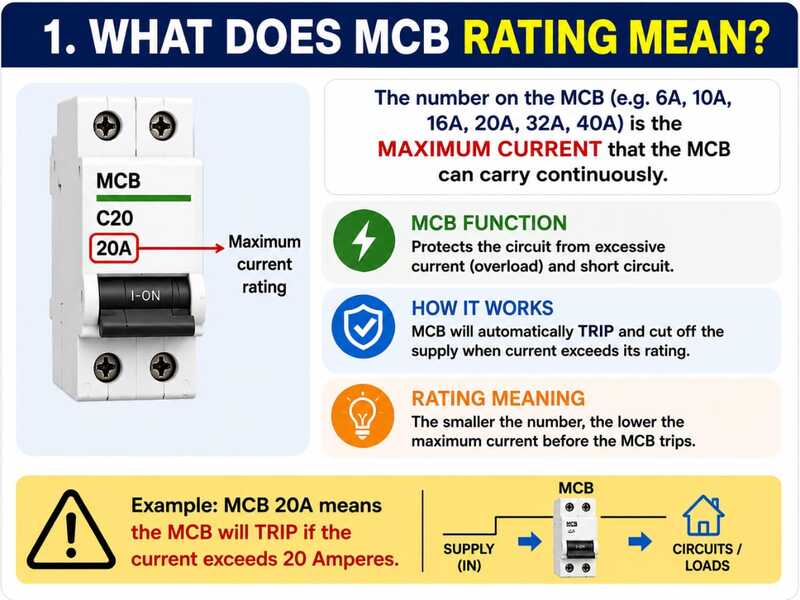
In general, an MCB is designed to carry the normal current of a circuit and operate when an overcurrent condition such as overload or short circuit occurs according to its operating characteristics.
For example, a marking such as C20 indicates a nominal current rating of 20A together with a Type C trip characteristic. This does not mean the MCB will trip instantly at exactly 20A in every situation because actual operation depends on the device's time-current characteristic.
What Is the Purpose of the Ampere Rating on an MCB?
The ampere rating helps determine whether the circuit breaker is suitable for the electrical circuit it is intended to protect.
Factors related to MCB rating include:
- Circuit design current
- Current-carrying capacity of the cable
- Type and characteristics of the electrical load
- Cable installation method
- Coordination with other protection devices
For this reason, the MCB rating should not be selected based only on the type of electrical appliance connected to the circuit.
MCB Ratings 6A, 10A, 16A, 20A, 32A and 40A
MCBs are available in a range of nominal current ratings. Common examples include:
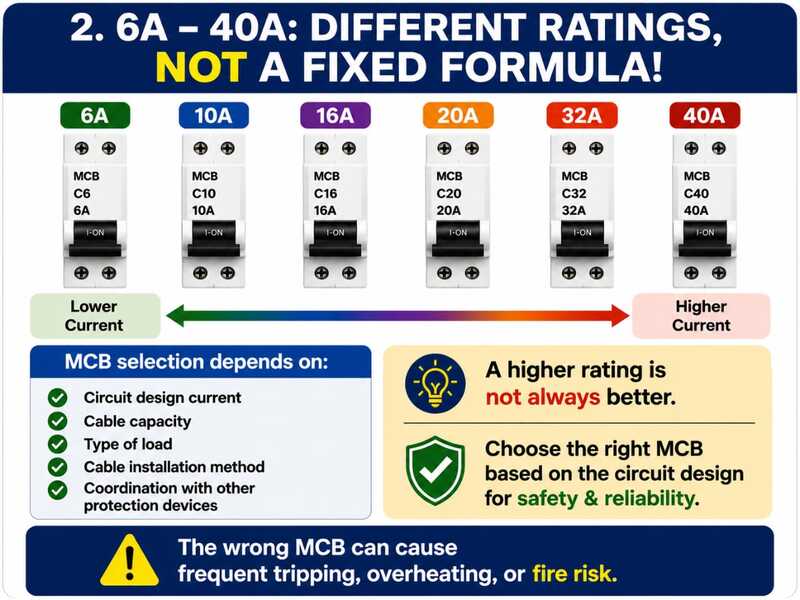
- 6A
- 10A
- 16A
- 20A
- 32A
- 40A
The different numbers indicate different nominal current ratings, but a higher rating does not automatically mean a better MCB.
The correct rating needs to match the circuit that is being protected.
Is a Higher MCB Rating Better?
No.
A higher-rated MCB allows a greater current before the overcurrent protection operates according to the characteristics of the device.
If the rating is too high compared with the cable capacity or circuit design, the cable may carry excessive current without receiving the intended level of protection.
Increasing the MCB rating is therefore not an automatic solution when a circuit breaker trips frequently.
Why Does an MCB Keep Tripping?
An MCB may trip because of conditions such as overload, short circuit or another fault within the circuit.
If an MCB trips repeatedly, the actual cause should be identified before changing the breaker rating.
Do not simply replace the MCB with a higher ampere rating because doing so can change the protection level of the circuit.
If your main issue is a circuit breaker that keeps tripping, read our guide on why house electricity trips.
MCB Rating and Cable Size
The MCB rating is closely related to the current-carrying capacity of the cable used in the circuit.
Cable capacity can be affected by factors such as:
- Conductor size
- Cable type
- Installation method
- Ambient temperature
- Cable grouping
- Actual installation conditions
The MCB needs to be selected so that it provides suitable overcurrent protection for the cable and circuit.
MCB Rating and Type of Load
The type of electrical load also affects the protection design of a circuit.
Some loads have starting currents or operating characteristics that differ from ordinary loads. For this reason, circuit breaker selection should not be based only on the power rating or ampere value printed on the appliance.
The circuit design needs to consider the overall characteristics of the load and electrical system.
What Does the Letter C Mean on a C20 MCB?
In addition to the ampere rating, some MCBs have a letter such as B, C or D before the current rating.
Examples include:
- B16
- C20
- C32
The letter relates to the magnetic trip characteristic of the MCB and does not represent the ampere rating.
For example, on a C20 MCB:
- C = trip characteristic
- 20 = 20A nominal current rating
Do Not Choose an MCB Rating Based Only on the Appliance
It is not accurate to use a fixed rule such as “lighting must use 6A” or “socket circuits must use 20A” for every electrical installation.
Although there are common design practices for certain types of circuits, the final MCB rating needs to suit the cable, load, installation method and actual protection requirements.
This is why the MCB rating should be considered part of the overall circuit design rather than a separate component choice.
Is an MCB the Same as an RCCB or RCBO?
No.
An MCB provides overcurrent protection against conditions such as overload and short circuit, while an RCCB provides residual current protection.
An RCBO combines overcurrent and residual current protection in a single device.
For a clearer comparison, read our guide on MCB vs RCCB vs RCBO.
When Should the MCB Rating Be Checked?
The MCB rating and condition should be reviewed if:
- The MCB trips frequently without a clear cause
- Electrical wiring or renovation work has been carried out
- New electrical loads have been added to the circuit
- The cable or circuit breaker shows signs of overheating
- The MCB rating appears inconsistent with the known circuit design
An inspection can help confirm whether the circuit protection is still suitable for the current electrical installation.
FAQ
What does a 20A MCB mean?
A 20A MCB has a nominal current rating of 20 amperes. Its actual trip operation depends on the time-current characteristic and type of MCB.
Is a 32A MCB better than a 20A MCB?
Not necessarily. A higher rating is only suitable when the circuit design, cable capacity and electrical load require that rating.
Can I replace a 20A MCB with a 32A MCB?
This should not be done without first assessing the circuit. Cable capacity, connected load and protection design need to be checked before changing the MCB rating.
What is the difference between C20 and C32?
Both have a Type C trip characteristic, but C20 has a nominal current rating of 20A while C32 has a nominal current rating of 32A.
Need an Electrical System Inspection?
If the MCB rating, DB box condition or circuit design at a home, shop, office or commercial premises is unknown, an inspection can help determine whether the protection system is still suitable for the current installation.
📲 WhatsApp us for an initial review of your MCB, DB box and electrical wiring system.