
When planning electrical wiring for a home, shop or office, one of the common questions is whether surface wiring or concealed wiring is more suitable.
Both methods can be used for electrical installations, but the right choice depends on the property condition, renovation stage, wiring route, preferred appearance and available budget.
Understanding the differences between surface wiring and concealed wiring can help you choose a suitable method before the electrical work begins.
📲 WhatsApp us to arrange surface or concealed wiring services.
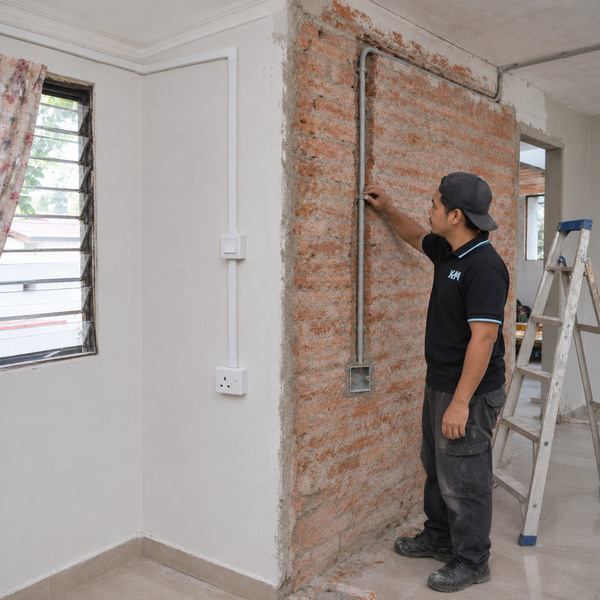
What Is Surface Wiring?
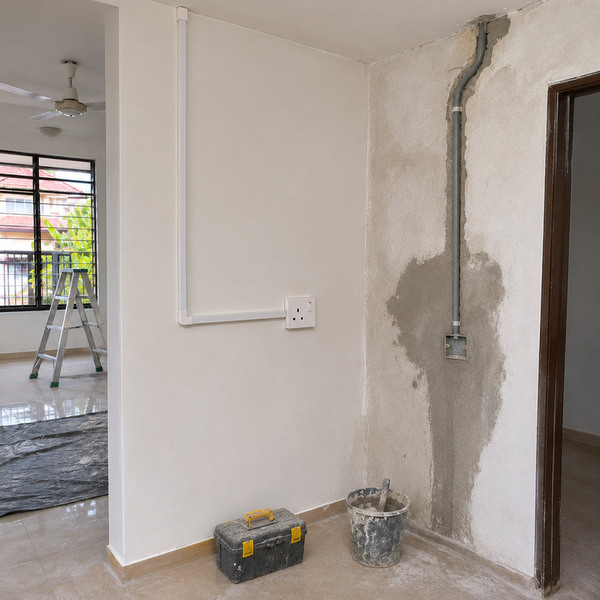
Surface wiring is installed along the visible surface of a wall or ceiling. Electrical cables are normally protected inside PVC casing, trunking or conduit.
This method does not require extensive wall chasing because the wiring route remains accessible after installation.
Surface wiring is commonly used for:
- Existing homes and premises
- Additional electrical points
- Shops, offices and commercial spaces
- Renovation work with limited wall hacking
- Areas where future access to the wiring is important
Although the casing or conduit remains visible, careful route planning and neat installation can produce an organised appearance.
What Is Concealed Wiring?
Concealed wiring is installed inside walls, ceilings or other parts of the building structure. The conduit and electrical boxes are placed inside the chased areas before they are covered with plaster or finishing material.
Only the switches, sockets and other electrical accessories remain visible after the work is completed.
Concealed wiring is commonly considered for:
- New buildings
- Major renovation projects
- Properties undergoing wall and ceiling work
- Areas where a cleaner finished appearance is preferred
- Electrical layouts planned before finishing work begins
This method requires early planning because changing or adding wiring after the wall has been completed may involve further hacking and repair work.
Differences Between Surface and Concealed Wiring
The main difference between surface and concealed wiring is the location and accessibility of the wiring route.
- Installation: Surface wiring is installed over the wall, while concealed wiring is routed inside the wall or ceiling.
- Appearance: Concealed wiring provides a cleaner finish because the conduit and cables are hidden.
- Accessibility: Surface wiring is generally easier to inspect, modify or extend later.
- Wall work: Concealed wiring requires wall chasing, plastering and finishing work.
- Installation time: Surface wiring can usually be completed with less structural work.
- Cost: Concealed wiring may cost more because of the additional wall and finishing work required.
Neither method is automatically better for every property. The suitable method depends on the type of building and the electrical work required.
Wiring for New Homes and Buildings
Concealed wiring is commonly selected for new homes and buildings because the wiring route can be planned before the walls and ceilings are completed.
Electrical points for lights, fans, sockets, air conditioners, water heaters and other equipment can be arranged according to the building layout.
Planning at an early stage also allows the conduit, electrical boxes and cable routes to be installed before plastering and finishing work begins.
Surface wiring may still be used in areas such as storerooms, utility rooms or service spaces where accessibility is more important than appearance.
Wiring for Existing Properties
For an existing home, shop or office, surface wiring may be more practical when new electrical points need to be added without extensive wall hacking.
The installation route can be planned using suitable casing, trunking or conduit while keeping the existing wall finish largely intact.
Concealed wiring can still be installed in an existing property, but the work may involve wall chasing, removal of existing finishes, plaster repairs and repainting.
If old or damaged cables also need to be replaced, refer to our electrical rewiring service.
Can Surface and Concealed Wiring Be Combined?
Yes. Surface and concealed wiring can be used within the same property according to the condition and purpose of each area.
For example, concealed wiring may be installed in living areas, bedrooms or customer-facing spaces where a clean finish is preferred.
Surface wiring may be used in storerooms, kitchens, workshops, utility areas or locations where future additions and maintenance are more likely.
The combination should be planned carefully so that the cable routes, circuit protection and electrical accessories remain suitable for the installation.
Does Concealed Wiring Cost More?
Concealed wiring may cost more because the work normally involves more than installing the electrical cables.
The overall cost may be affected by:
- Wall chasing and conduit installation
- Number and type of electrical points
- Length and complexity of the wiring route
- Wall or ceiling condition
- Plastering and finishing work
- Cable size and circuit requirements
- Condition of the existing DB box
Surface wiring may involve less wall work, but the final cost still depends on the number of points, cable route, materials and site conditions.
For estimated prices and the factors affecting wiring cost, refer to our electrical wiring cost guide.
📲 WhatsApp us to arrange wiring work based on your property and required electrical points.
Safety of Surface and Concealed Wiring
Both surface and concealed wiring can be safe when the installation is properly planned and suitable materials are used.
Electrical cables should have suitable protection, and the cable size, circuit arrangement and protective devices must match the electrical load and installation method.
For surface wiring, the casing, trunking or conduit should be installed securely and protected from physical damage.
For concealed wiring, the conduit and electrical boxes should be positioned correctly before the wall is covered. The cable route should also be considered before drilling or installing cabinets, shelves and other wall fittings.
The DB box, MCB, RCCB, earthing system and electrical circuits should be considered as part of the complete installation rather than assessing the wiring route alone.
For new wiring, renovations and additional electrical points, view our complete electrical wiring services.
Frequently Asked Questions
Is surface wiring safe?
Yes. Surface wiring can be safe when the correct cable, casing, conduit, electrical accessories and circuit protection are used and the installation is carried out properly.
Is concealed wiring suitable for an existing property?
Yes, but the work may require wall chasing, plaster repairs and repainting. The actual scope depends on the wiring route and condition of the property.
Is concealed wiring always more expensive?
Not necessarily, but it may cost more because conduit installation, wall chasing and finishing work may be required. The actual cost depends on the site condition and scope of work.
Can surface and concealed wiring be used together?
Yes. Both methods can be combined according to the use of each area, required appearance and need for future access.
Which wiring method is easier to modify later?
Surface wiring is generally easier to access, extend or modify because the wiring route is not hidden inside the wall.
Need Surface or Concealed Wiring?
Choose the wiring method according to the property condition, renovation stage, required electrical points and planned wiring route.
📲 WhatsApp us to arrange electrical wiring services for your home or premises.