
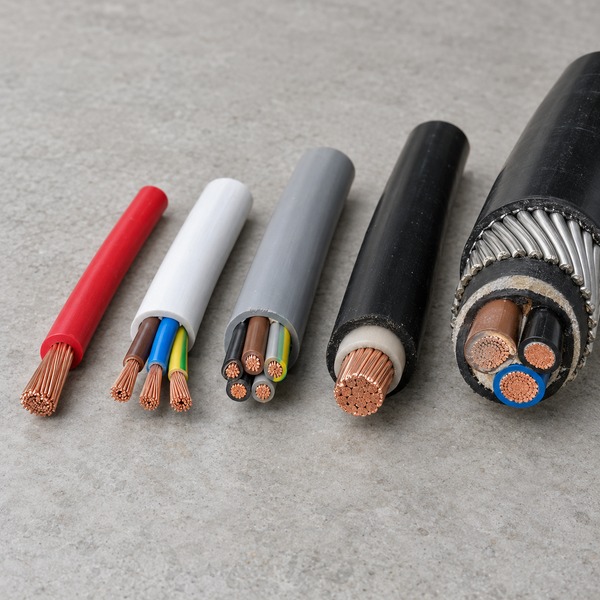
Electrical cables are manufactured with different conductor materials, insulation systems and physical constructions. Each type has its own characteristics and must be selected according to the circuit design, installation conditions and surrounding environment.
Terms such as PVC, XLPE, flexible, multicore and armoured do not necessarily describe completely separate cable categories. For example, an armoured cable may also use XLPE insulation and contain several cores within the same outer sheath.
📲 Need electrical wiring services? WhatsApp us for assistance.
Why Are There Different Types of Electrical Cables?
An electrical cable must carry current safely while maintaining suitable insulation and connection conditions. Its construction may vary according to voltage, current, temperature, installation environment and the level of mechanical protection required.
Electrical cables may differ in terms of:
- Conductor material
- Number of cores
- Insulation material
- Conductor flexibility
- Mechanical protection
- Voltage rating
- Suitability for the installation environment
The cable type and conductor size must be determined as part of the circuit design. The outside diameter or insulation thickness alone does not indicate the actual capacity of a cable.
PVC Single-Core Cable
A PVC single-core cable consists of one conductor covered with PVC insulation. This type is commonly used in fixed electrical installations when installed through a suitable conduit, trunking or wiring enclosure.
The term single-core means that the cable contains one insulated conductor. It does not mean that only one cable is required to complete an electrical circuit.
Its suitability depends on the conductor size, voltage rating, installation conditions and product specifications. A cable should not be selected based on its insulation colour alone.
Multicore Cable
A multicore cable contains two or more insulated conductors within one outer sheath. The number of cores depends on the cable function and the electrical system in which it is used.
A multicore cable may have:
- Solid or stranded conductors
- PVC or another type of insulation
- Two, three or more cores
- Additional protective layers for specific applications
The term multicore only describes the number of cores within the cable. It does not automatically determine the insulation type, current-carrying capacity or suitable installation location.
Flexible Cable
A flexible cable uses conductors made from multiple fine strands. This construction allows the cable to bend more easily than a solid conductor.
Flexible cables are commonly used for electrical appliances, movable connections and equipment that requires some degree of movement. However, a flexible cable is not automatically a suitable replacement for a cable designed for fixed wiring.
The sheath type, conductor size, operating temperature and intended application stated by the manufacturer must still be checked before the cable is used.
XLPE Cable
XLPE stands for cross-linked polyethylene. This term refers to the cable insulation material and not the conductor material inside the cable.
XLPE insulation is used in various cable constructions and may provide particular temperature and insulation characteristics according to the product specifications. An XLPE cable may contain one or several cores and may be manufactured with or without armour.
The XLPE description alone is therefore insufficient to determine whether a cable is suitable for a particular installation. The manufacturer’s technical data must still be checked.
Armoured Cable
An armoured cable has an additional mechanical protection layer around its internal construction. This layer helps protect the cable from physical damage in installations that require a higher level of mechanical protection.
This cable may be used for outdoor routes, underground routes or other locations where the installation design requires additional protection. The cable route, termination, earthing method and accessories must be compatible with the particular armoured cable construction.
Termination work should not be carried out based on cable appearance alone because the armour, gland and internal construction may differ between products.
Flame-Retardant and Fire-Resistant Cables
Flame-retardant and fire-resistant do not have the same meaning.
- Flame-retardant generally refers to a cable characteristic that helps limit the spread of flame under specified test conditions.
- Fire-resistant generally refers to a cable designed to maintain circuit operation for a specified period and under particular fire conditions.
Cables for safety systems or important circuits must be selected according to the relevant design requirements and standards. A marketing label alone is not enough to confirm cable performance.
📲 Planning new wiring or rewiring? WhatsApp us for electrical services.
Copper and CCA Cables
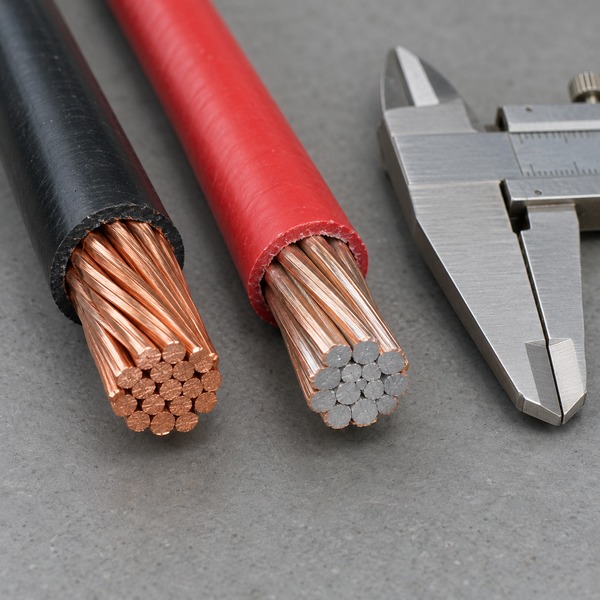
A copper cable uses copper as its conductor material. CCA stands for Copper Clad Aluminium, which describes an aluminium conductor with a layer of copper on its outer surface.
For the same conductor cross-sectional area, CCA generally has lower conductivity and higher resistance than copper. A CCA conductor size therefore should not be treated as directly equivalent to a copper conductor without referring to its specifications and the circuit design.
The colour of the conductor surface is also insufficient to confirm that the complete conductor is made from copper. Product information, technical specifications and applicable approval details should be checked.
How to Read Cable Information
Electrical cables normally have information printed or embossed on the insulation or outer sheath. These markings help identify the basic specifications of the product.
Details that may need to be checked include:
- Manufacturer’s name or identification
- Conductor size
- Number of cores
- Insulation or sheath type
- Voltage rating
- Product standard
- Approval or certification marking
A cable should not be selected based only on its price, colour or outside thickness. Two cables that look similar may have different conductor sizes, materials and specifications.
Energy Commission Approval and SIRIM Marking
The Energy Commission regulates non-armoured wire, cable and cord within the applicable 0.5 mm² to 35 mm² range. Cables used for domestic electrical installations must have a suitable size and comply with the applicable approval and certification requirements.
Information on regulated electrical equipment and certification can be checked through the official Energy Commission ST-SIRIM information page.
Markings on a cable should be clear and traceable. Avoid using a cable when its origin, specifications or approval status cannot be properly verified.
Selecting Cables for Electrical Wiring
The cable type forms only one part of the circuit design. Its size and suitability may also be affected by:
- Load current
- Cable route length
- Voltage drop
- Installation method
- Ambient temperature
- Cable grouping inside conduit or trunking
- Type of circuit protection
For a new installation, cable selection should be considered together with circuit planning and electrical point locations. More information is available in our basic house wiring guide.
We provide electrical wiring services for houses, shops and offices, including new installations, renovations and additional electrical points.
If an old cable has damaged insulation or is no longer suitable for present electrical requirements, an inspection can be carried out before electrical rewiring is considered.
Frequently Asked Questions About Electrical Cables
Which cable is commonly used for electrical installations?
The cable type depends on the circuit and installation method. PVC single-core cables are commonly used for fixed wiring, while other cable constructions are used according to the installation and environmental requirements.
Can flexible cable be used for all electrical wiring?
No. Flexible cable is intended for particular applications and is not automatically suitable as a replacement for fixed wiring cable. The manufacturer’s specifications and circuit design must be considered.
What is the difference between copper and CCA cables?
A copper cable uses copper conductors, while CCA uses copper-clad aluminium conductors. The two materials have different conductivity and resistance characteristics.
Does a thicker cable always have a higher capacity?
Not necessarily. The outside thickness may be affected by the type and thickness of insulation. The actual conductor size and cable specifications must be checked.
Use Cables That Match the Installation Requirements
Each electrical cable is manufactured for specific applications and installation conditions. Terms such as PVC, XLPE, flexible, multicore and armoured describe different parts of cable construction and should not be used individually to determine overall suitability.
Cable selection should be considered together with the electrical load, circuit protection, cable route and installation environment. Cables with clear specifications and applicable approval markings help produce a more organised and suitable electrical installation.
📲 Need electrical wiring work? WhatsApp us to arrange the service.