
Home EV chargers are commonly available in 7kW, 11kW and 22kW capacities. Each capacity has different electrical supply requirements and charging speeds.
Choosing a charger should not be based on its power rating alone. The electrical supply at the property, the vehicle’s onboard charger and the existing electrical system must also be considered.
📲 Need EV charger wiring and installation? WhatsApp us to arrange the service.
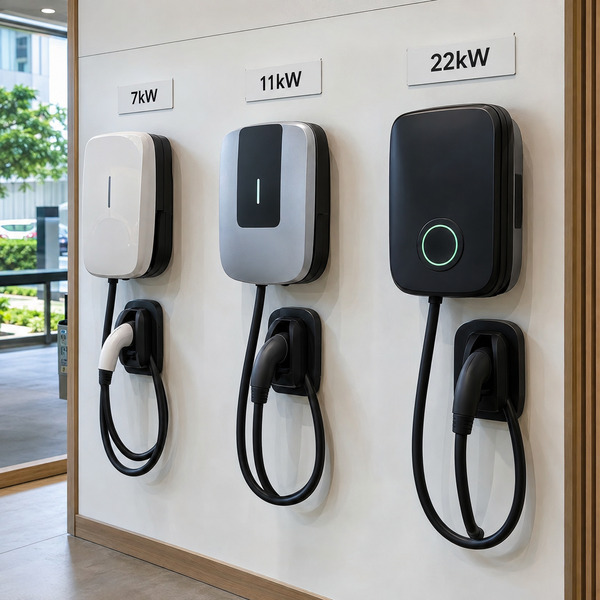
Difference Between 7kW, 11kW and 22kW EV Chargers
The kW rating indicates the amount of power an EV charger can supply. A charger with a higher capacity can potentially charge an electric vehicle more quickly.
However, the actual charging speed also depends on the maximum AC charging rate supported by the vehicle. If a vehicle can only accept 11kW AC charging, connecting it to a 22kW charger will not increase the charging rate beyond that limit.
- 7kW – commonly used with a single-phase supply
- 11kW – commonly requires a three-phase supply
- 22kW – requires a three-phase supply and suitable electrical capacity
7kW EV Charger
A 7kW EV charger is a common option for home charging. It is generally suitable for a property with a single-phase electrical supply and sufficient available capacity.
A 60kWh battery would theoretically take approximately eight to nine hours to charge from empty to full. The actual charging time may be longer due to energy losses, battery condition and the vehicle’s charging controls.
A 7kW charger can be a practical choice for drivers who charge their vehicles overnight and do not require faster charging.
11kW EV Charger
An 11kW EV charger provides a higher charging rate than a 7kW charger and is normally used with a three-phase electrical supply.
A 60kWh battery could theoretically take approximately five to six hours to charge fully. However, the vehicle must have an onboard charger that supports 11kW AC charging.
An 11kW charger may be considered for properties with a three-phase supply where a shorter charging time is required.
📲 WhatsApp us for 7kW, 11kW or 22kW EV charger wiring services.
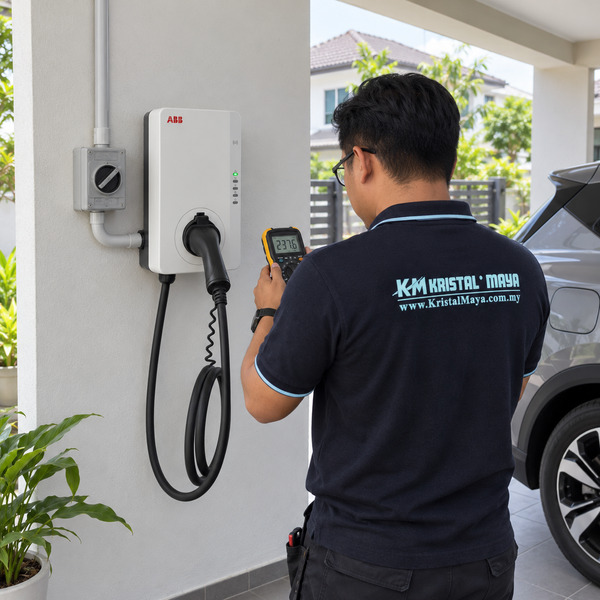
22kW EV Charger
A 22kW EV charger requires a three-phase electrical supply and places a higher load on the electrical system. The distribution board, cables and circuit protection must be suitable for the required capacity.
A 60kWh battery could theoretically be charged in under three hours if the vehicle supports 22kW AC charging. However, many electric vehicles have a lower maximum AC charging rate.
If a vehicle can only accept 7kW or 11kW AC charging, a 22kW charger will operate according to the vehicle’s charging limit. The vehicle specifications should therefore be checked before choosing a charger.
Single-Phase or Three-Phase Supply?
A single-phase supply is commonly used for a charger rated at approximately 7kW. An 11kW or 22kW charger will normally require a three-phase supply.
The type of supply is not the only factor that determines whether a charger can be installed. The electrical load, available supply capacity, condition of the distribution board and vehicle requirements must also be considered.
Not every property needs to be upgraded to a three-phase supply simply to install an EV charger. The decision should be based on the required charging capacity and the existing electrical system.
What Determines the Actual Charging Speed?
The actual charging speed can be affected by several factors:
- Maximum capacity of the EV charger
- Vehicle’s maximum AC charging rate
- Battery capacity and current charge level
- Single-phase or three-phase electrical supply
- Vehicle power management system
- Battery condition and temperature
The charging rate will normally follow the lowest limit between the EV charger, the electrical supply and the vehicle’s onboard charger.
Which EV Charger Is Suitable for a Home?
A 7kW EV charger is often sufficient for overnight charging. An 11kW charger may be considered if the property has a three-phase supply and the vehicle supports that charging capacity.
A 22kW charger is more suitable when the electrical supply, existing system and vehicle are all capable of supporting 22kW AC charging.
Before selecting a charger, check the specifications of the vehicle and charging unit. More information about the electrical requirements is available in our home EV charger wiring guide.
Frequently Asked Questions
Is a 22kW EV charger always faster?
Not necessarily. The actual charging speed depends on the maximum AC charging rate supported by the vehicle.
Can an 11kW EV charger use a single-phase supply?
An 11kW charger normally uses a three-phase supply. The charger specifications and electrical supply must be checked before installation.
Is a 7kW EV charger sufficient for a home?
In many situations, a 7kW charger is sufficient for overnight charging. The decision also depends on the battery capacity and daily driving requirements.
Does a 22kW charger require a distribution board upgrade?
Not necessarily. However, the capacity, available space and condition of the distribution board must be suitable for the required circuit and electrical protection.
Planning to Install an EV Charger at Home?
Choose the charger capacity according to the vehicle specifications, electrical supply and daily charging requirements.
For electrical and installation work, refer to our EV charger wiring service.
📲 WhatsApp us for home EV charger wiring and installation.