
Planning to install an EV charger at home?
Before the wiring work begins, several details should be identified, including the charger capacity, electricity supply, condition of the DB box, vehicle parking position and cable route to the charging point.
Early preparation helps determine the electrical work required and reduces the need to change the installation route after work has started.
📲 Planning to install an EV charger at home? WhatsApp us for EV charger wiring services.
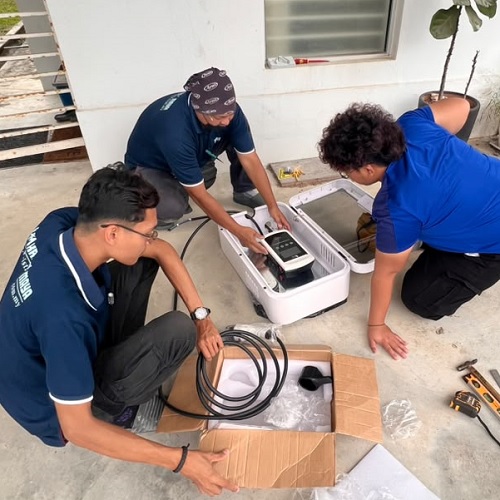
EV Charger Information to Prepare
Before arranging the wiring service, identify the basic details of the EV charger that will be installed. This information is important because different chargers have different capacities and electrical requirements.
Information to prepare includes:
- EV charger brand and model
- Charger capacity, such as 7kW, 11kW or 22kW
- Single-phase or three-phase supply requirement
- Proposed charger location
- Usual vehicle parking position
- Whether the charger has already been purchased or is still being selected
If the charger capacity has not yet been decided, compare the requirements for a 7kW, 11kW or 22kW EV charger before choosing a suitable unit.
Check the Existing Electricity Supply
The electricity supply at the property should be identified before the charger is installed. A 7kW EV charger is commonly used with a single-phase supply, while an 11kW or 22kW charger will normally require a three-phase supply.
However, the charger capacity is not the only factor that determines whether an installation is suitable. Existing electricity usage, high-powered appliances and the total electrical load at the property must also be considered.
Not every home needs to be upgraded to a three-phase supply. The actual requirement depends on the charger capacity, existing electrical system and the maximum AC charging rate supported by the vehicle.
Condition and Space Inside the DB Box
The DB box is one of the main parts that should be checked before adding an EV charger circuit. Its suitability cannot be determined only by looking at the size of the enclosure or the amount of empty space available.
Important considerations include:
- Condition of the existing main switch and protective devices
- Space for an additional EV charger circuit
- Available electrical supply capacity
- Arrangement of circuits inside the DB box
- Condition of the existing cables and connections
- Suitability of the earthing system
The DB box does not need to be replaced for every EV charger installation. However, if it is full, contains older components or does not have suitable space for another circuit, a DB box upgrade may need to be considered.
Choose a Suitable EV Charger Location
The charger location should be planned according to the usual parking position and the location of the charging port on the vehicle. A suitable position allows the charging cable to be used without being stretched or placed across a main walkway.
Important factors include:
- Distance between the charger and the vehicle
- Location of the charging port on the vehicle
- Protection from rain and weather exposure
- Space for the charger and isolator
- Access for operation and maintenance
- Risk of the charging cable obstructing a walkway
If the charger will be installed outside the house, the wall condition, covered area and exposure to weather should also be considered when choosing the location.
Cable Route from the DB Box to the Charger
The cable route should be planned from the DB box to the proposed EV charger location. The distance and condition of the route will affect the cable length, conduit or trunking requirements and any additional installation work.
The wiring route may pass through:
- Ceiling spaces
- Internal or external walls
- The porch or vehicle parking area
- Surface-mounted conduit or trunking
- Outdoor areas that require additional protection
The cable size should not be selected based on charger capacity alone. Cable distance, electrical load, installation method and environmental conditions also affect the cable and circuit protection required.
📲 Need wiring to the charger location? WhatsApp us for EV charger wiring services.
Does an EV Charger Need a Dedicated Circuit?
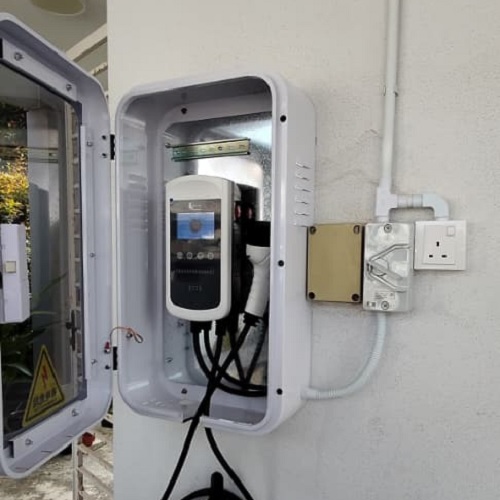
An EV charger can place a continuous load on the electrical system for an extended period. A wallbox installation will therefore normally require a dedicated circuit designed according to the charger capacity and the existing electrical installation.
The circuit should use suitable cables and protective devices. An isolator near the charger also provides a point to disconnect the electricity supply during maintenance or when the charger needs to be switched off.
An EV charger should not be connected randomly to an existing socket or electrical point without confirming that the circuit is suitable for the charger type and charging load.
Information Required for a Price Estimate
Basic information and clear photographs can help the electrical contractor understand the installation before work begins.
Prepare the following:
- EV charger brand, model and capacity
- A photograph of the closed DB box
- A photograph showing the inside of the DB box
- A photograph of the proposed charger location
- A photograph of the vehicle parking area
- Estimated distance from the DB box to the charger location
- Photographs of the proposed cable route
- Information about the single-phase or three-phase supply
The final cost will depend on the site conditions and electrical work required. For more information about the factors that affect the quotation, read our guide to home EV charger installation cost.
Why Early Preparation Is Important
Proper preparation helps identify the charger location, cable route and condition of the electrical system before installation begins. It also reduces the need to change the installation after the cables or conduit have already been installed.
The DB box and electricity supply should be assessed because an EV charger adds a new electrical load to the property. A charger with a higher capacity may not be suitable if the supply, wiring or vehicle charging capability cannot support it.
Frequently Asked Questions
What should I prepare before installing an EV charger?
Prepare the charger model and capacity, photographs of the DB box, vehicle parking position, estimated distance and proposed cable route from the DB box to the charger.
Does every home need a three-phase supply?
No. The suitable electricity supply depends on the charger capacity, existing electrical usage and the maximum AC charging rate supported by the vehicle.
Can an EV charger use an existing electrical point?
It depends on the type of charger and installation requirements. A wallbox will normally require a dedicated circuit with suitable cables and electrical protection.
Does the DB box need to be upgraded before installing an EV charger?
Not necessarily. An upgrade may be required if the DB box does not have suitable space, contains unsuitable components or cannot support the additional circuit.
What photographs should I provide for a price estimate?
Provide photographs of the closed and open DB box, proposed charger location, vehicle parking area and the route between the DB box and charger location.
Need Home EV Charger Wiring Services?
The charger location, DB box condition and cable route should be identified before installation work begins.
For installation work, see our home EV charger wiring service.
📲 WhatsApp us for home EV charger wiring services.