
Home EV charger installation cost can vary from one property to another. The final price usually depends on the charger capacity, wiring distance from the DB box, cable route and the condition of the existing electrical system.
Before the installation price can be determined, the charger location and proposed wiring route need to be identified. This helps the contractor estimate the cable length, electrical protection and any additional work required.
📲 Need an EV charger installation price? WhatsApp us for a quotation.
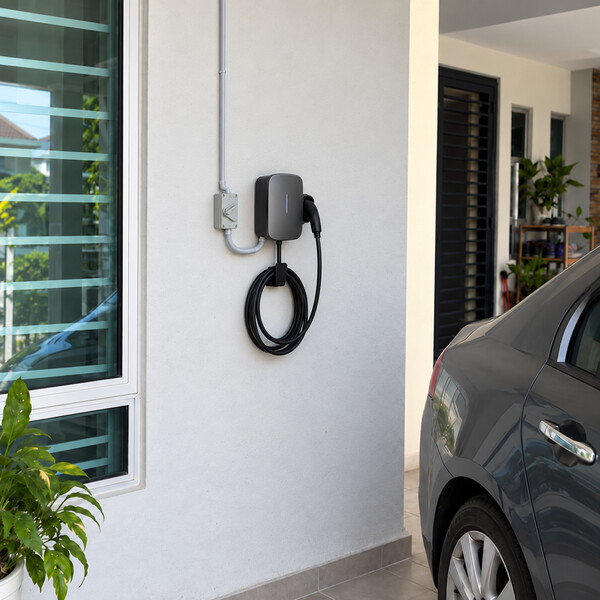
How Much Does It Cost to Install an EV Charger at Home?
The installation cost depends on the work required at the property. A DB box located close to the charging point with an accessible cable route will usually involve less work than an installation requiring a long cable run or routing through several areas of the house.
Factors that may affect the installation price include:
- The capacity of the EV charger.
- The distance between the DB box and charging location.
- The size and type of cable required.
- The use of conduit or trunking.
- The condition and available space in the existing DB box.
- The required circuit protection and isolator.
- Wall drilling or concealed cable routing.
A general price without checking the installation conditions may not represent the actual cost. Details such as the charger capacity, DB box condition and parking location can help provide a more accurate initial estimate.
EV Charger Capacity and Wiring Cost
A home EV charger should be selected based on the electrical supply, the vehicle’s charging capability and the required charging time. A higher-capacity charger may require a different cable size, circuit protection and electrical supply.
The differences between a 7kW, 11kW and 22kW EV charger should be understood before installation. A 7kW charger is commonly used with a single-phase supply, while 11kW and 22kW chargers normally require a suitable three-phase supply.
A higher charger capacity is not automatically the best option for every home. The decision should consider the electrical supply, EV specifications and the existing electricity usage at the property.
Wiring Distance from the DB Box
The distance between the DB box and the EV charger directly affects the amount of cable and conduit required. A short and accessible route will generally cost less than a long route requiring additional installation work.
The wiring may need to pass through the ceiling, walls, covered areas or an outdoor section of the property. When the route is exposed to weather, suitable materials and installation methods should be used to protect the wiring.
The charger should also be installed close to the vehicle’s usual parking position. A practical location prevents the charging cable from being stretched, left across a walkway or interfering with vehicle movement.
Condition of the Existing DB Box
The DB box needs suitable space for the circuit protection required by the EV charger. The main switch, RCCB, MCB, cable connections and available electrical capacity may also need to be checked.
If the existing DB box is in suitable condition and has sufficient space, major alterations may not be necessary. Additional work may be required when the DB box is full, contains older components or does not have enough space for a new circuit.
This is important because an EV charger can operate continuously for several hours. A dedicated circuit helps separate the charging load from the lighting, socket outlets and other electrical appliances in the house.
📲 Need EV charger wiring at home? WhatsApp us for installation service.
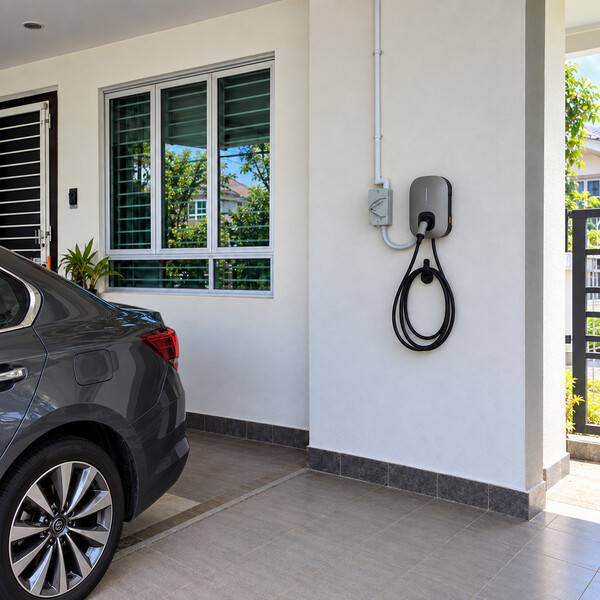
Electrical Protection for an EV Charger
Installing an EV charger involves more than running a cable from the DB box to the charging location. The circuit requires suitable protection based on the charger type, manufacturer’s specifications and installation conditions.
Components that may be required include:
- An MCB or suitable circuit protection.
- An RCCB or appropriate earth-leakage protection.
- An isolator installed near the EV charger.
- A suitable cable size based on load and distance.
- Conduit or trunking to protect the cable route.
The actual protection requirements should be determined according to the charger specifications and the property’s electrical system. The installation should not be planned based only on the charger capacity without considering the supply and circuit arrangement.
Is an Electrical Supply Upgrade Required?
Not every EV charger installation requires an electrical supply upgrade. The requirement depends on the charger capacity, the existing supply and the total electrical load used in the house.
A suitable EV charger may still be installed at a property with a single-phase supply, subject to the condition and available capacity of the electrical system. An 11kW or 22kW charger will generally require a suitable three-phase supply.
More information about the electrical requirements and cable route is available in our home EV charger wiring guide.
How to Get a More Accurate Installation Price
Basic information about the charger and property can help the contractor prepare an initial estimate. Clear photographs also make it easier to understand the possible work before a site visit or installation.
Useful information includes:
- The EV charger brand and capacity.
- Photographs of the DB box with the cover closed and open.
- A photograph of the proposed charger location.
- The estimated distance from the DB box to the parking area.
- Whether the property has a single-phase or three-phase supply.
The final quotation will still depend on the actual site conditions. The cable route, building structure and electrical protection requirements can only be confirmed accurately after the installation conditions are identified.
Frequently Asked Questions
Does the installation price include wiring?
It depends on the quotation. The cable length, conduit, isolator, circuit protection and installation work should be clearly stated in the proposed scope.
Can an EV charger use an existing socket outlet?
A home EV charger should use a suitable dedicated circuit based on the charger capacity and the condition of the property’s electrical system.
Is a 22kW EV charger suitable for every home?
No. A 22kW charger normally requires a suitable three-phase supply, and the vehicle must also support that AC charging rate.
How long does EV charger installation take?
The duration depends on the wiring distance, cable route and condition of the DB box. An installation with an accessible cable route can usually be completed more quickly.
Home EV Charger Installation Service
The correct installation price should consider the charger capacity, cable length, wiring route and condition of the DB box. Proper planning helps ensure that suitable circuit protection is installed and the wiring is arranged neatly.
For professional installation, visit our EV charger wiring and installation service page.
📲 WhatsApp us for home EV charger wiring and installation service.