
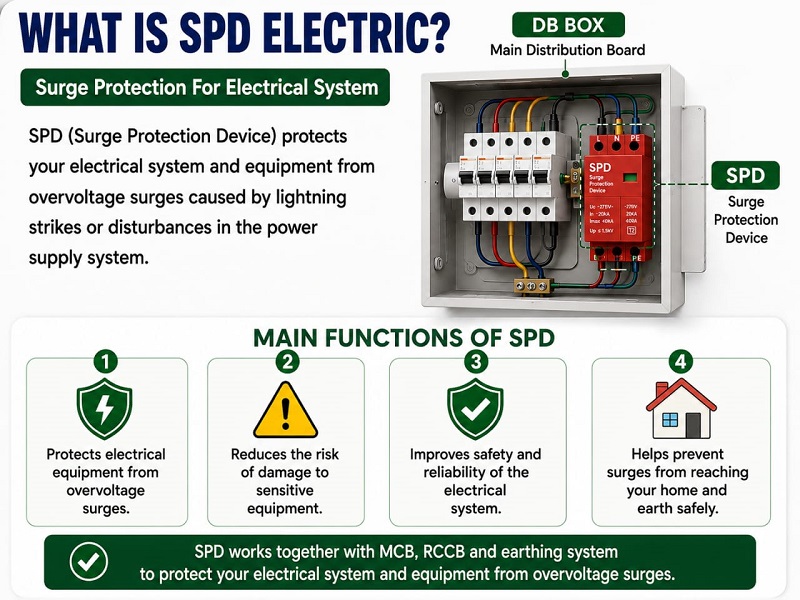
An SPD, or Surge Protection Device, is an electrical protection device used to help protect electrical systems and equipment from temporary overvoltage or voltage surges.
Surges can occur due to lightning, disturbances in the power supply network or sudden switching events within an electrical system. Although a surge usually lasts for a very short time, the high voltage can affect electronic equipment and electrical installations.
An SPD does not replace an MCB, RCCB, RCBO or the earthing system. Each device performs a different protection function and forms part of the overall electrical protection system.
What Is an SPD?
SPD stands for Surge Protection Device.
Its main function is to help limit excessive transient voltage and divert surge current through a suitable protection path so that the impact on the electrical system can be reduced.
What Is an Electrical Surge?
An electrical surge is a temporary increase in voltage that occurs for a very short period.
Surges can be caused by several conditions, including:
- Lightning or the indirect effects of lightning
- Disturbances in the electricity supply network
- Switching of certain electrical loads
- Sudden changes within the electrical system
Modern electronic equipment such as computers, televisions, routers, control systems, office equipment and other electronic devices can be more sensitive to voltage surges than conventional electrical loads.
Main Functions of an SPD
An SPD helps limit the effect of voltage surges before they cause greater impact to the protected system or equipment.
Its main functions include:
- Helping protect electrical and electronic equipment from voltage surges
- Reducing the risk of damage caused by transient overvoltage
- Helping improve the reliability of the electrical system
- Diverting part of the surge current through the relevant protection path
The effectiveness of an SPD depends on the device type, earthing system, installation location and the overall electrical protection design.
How Does an SPD Work?
Under normal voltage conditions, an SPD should not interfere with the normal operation of the electrical system.
When a voltage surge exceeds a certain protection level, the SPD responds by providing a path for surge current and helps limit the voltage reaching the equipment or system being protected.
Once the surge has passed, the SPD returns to its normal operating condition if the device remains serviceable.
Types of SPD in an Electrical System
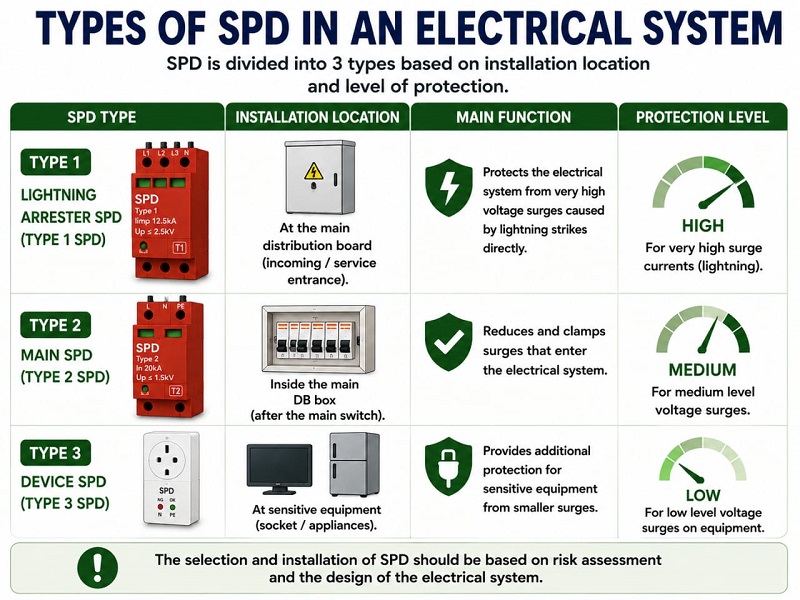
SPDs can be divided into different types according to installation location and the level of protection required.
Type 1 SPD
Type 1 SPD is used at the upstream part of an electrical installation and is designed to handle high-energy surges, including conditions associated with lightning current.
It may be installed at the incoming or main distribution section when required by the protection design.
Type 2 SPD
Type 2 SPD is commonly used in distribution boards to help limit surges entering the internal electrical installation.
It can form part of the main surge protection for circuits and equipment within a premises.
Type 3 SPD
Type 3 SPD is used closer to sensitive equipment to provide additional protection against residual surges that remain after upstream protection stages.
This type is generally considered additional protection and does not replace upstream SPD protection where that protection is required.
SPD vs MCB, RCCB and RCBO
SPD, MCB, RCCB and RCBO perform different electrical protection functions.
- SPD – helps protect against temporary voltage surges
- MCB – protects circuits against overload and short circuit
- RCCB – detects residual or leakage current
- RCBO – combines overcurrent and residual current protection
For a clearer explanation of MCB, RCCB and RCBO, read our guide on MCB vs RCCB vs RCBO.
Is SPD the Same as Earthing?
No. An SPD and an earthing system are not the same thing.
An SPD is a protection device that helps limit and divert surge energy, while an earthing system provides the grounding connections and relevant paths within the electrical installation.
The effectiveness of surge protection can depend significantly on the condition of the earthing system and the overall protection arrangement.
To understand the role of grounding in an electrical installation, read our guide on electrical earthing.
Is SPD the Same as a Lightning Protection System?
No. An SPD is not a replacement for a building lightning protection system.
A lightning protection system and an SPD have related but different functions. A lightning protection system is designed to manage the effects of lightning on a structure and provide a path for lightning current, while an SPD helps protect electrical systems and equipment from voltage surges entering through the electrical installation.
Does Every Premises Need an SPD?
The need for SPD protection is not necessarily the same for every building or electrical installation.
Factors that may influence the need and type of SPD include:
- Type and value of connected equipment
- Sensitivity of electronic equipment
- Lightning and surge exposure risk
- Type of electricity supply system
- Condition of the earthing system
- Electrical installation design and risk assessment
For this reason, one SPD type or configuration should not automatically be assumed to be suitable for every home or premises.
Where Is an SPD Installed?
The installation location depends on the SPD type and the overall surge protection design.
An SPD may be installed at the incoming section, distribution board or closer to specific sensitive equipment depending on the level of protection required.
Connection length, cable arrangement, earthing system and coordination between SPDs can also affect surge protection performance.
When Should an SPD Be Checked?
Some SPDs have status indicators that show the condition of the protection module.
An inspection may be required if:
- The SPD status indicator shows an abnormal condition
- The SPD has been exposed to a significant surge or lightning event
- There are signs of physical damage or excessive heat
- The electrical system is being inspected or upgraded
- The condition or age of the SPD is unknown
An SPD that has been damaged or reached the end of its service condition may no longer provide the intended level of protection.
FAQ
What is the main function of an SPD?
An SPD helps limit temporary overvoltage and reduces the impact of voltage surges on the protected electrical system and equipment.
Can an SPD prevent all lightning damage?
No. An SPD is only one part of an overall protection system and cannot guarantee that all lightning-related damage will be prevented.
Does an SPD replace an MCB or RCCB?
No. SPD, MCB and RCCB perform different protection functions and should not be considered replacements for one another.
Does an SPD need an earthing system?
The SPD installation arrangement should follow the relevant system design and protection requirements. A suitable earthing system is an important part of the overall surge protection arrangement.
Need an Electrical Protection System Inspection?
If the condition of the SPD, DB box or electrical protection system at a home, shop, office or commercial premises is unknown, an inspection can help identify the actual condition before any modification or installation work is carried out.
📲 WhatsApp us for an initial review of your DB box and electrical protection system.