
Electrical cable sizes for homes must be selected according to the type of circuit, electrical load and installation conditions.
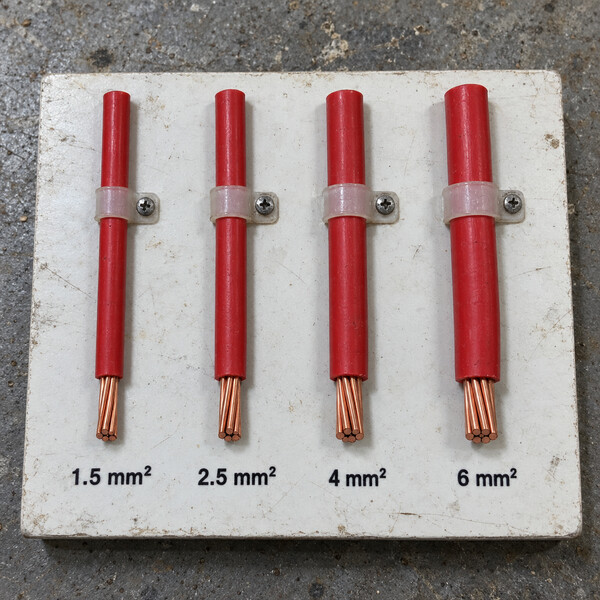
Cables measuring 1.5mm², 2.5mm², 4mm² and 6mm² have different applications. Using a larger cable does not automatically make an installation more suitable if the circuit design, protective device and installation method are incorrect.
This guide explains the common uses of each cable size and the factors that should be considered before an electrical circuit is installed.
📲 Need new wiring or additional electrical points? WhatsApp us for electrical wiring services.
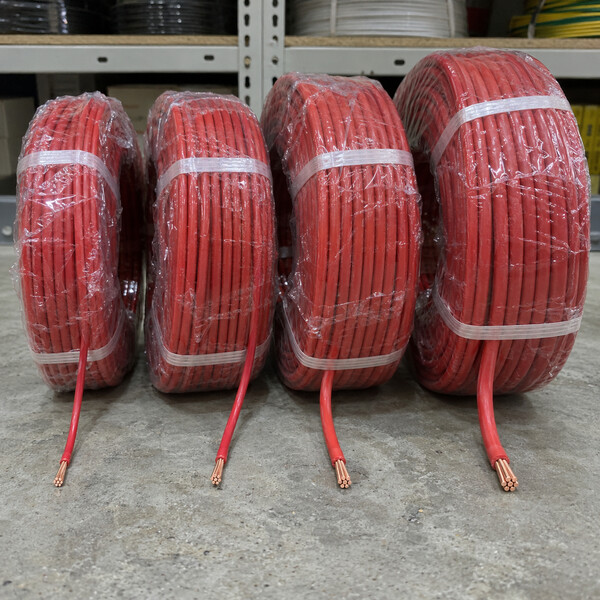
What Does Electrical Cable Size Mean?
A cable size such as 1.5mm² or 2.5mm² refers to the cross-sectional area of its conductor. It does not refer to the overall diameter of the cable together with its insulation.
In general, a conductor with a larger cross-sectional area can carry more current. However, its actual current-carrying capacity is also affected by the cable type, conductor material, installation method, surrounding temperature and other conditions.
The size printed on a cable should also be distinguished from its electrical cable colour code. Cable size refers to the cross-sectional area of the conductor, while colour is used to identify the function of a conductor.
Common Uses of 1.5mm² Cable
A 1.5mm² cable is commonly used for circuits with lower current requirements, depending on the design and installation method.
Common applications include:
- Light points
- Lighting circuits
- Fan points
- Certain control circuits
Although this cable size is commonly used for lights and fans, its suitability still depends on the number of points, circuit length and protective device used.
Common Uses of 2.5mm² Cable
A 2.5mm² cable is commonly used for circuits that require a higher capacity than standard lighting circuits.
Common applications include:
- 13A socket circuits
- Certain electrical points
- Dedicated circuits that match the installation design
Using a 2.5mm² cable does not mean it is suitable for every socket or electrical appliance. The number of points, circuit arrangement, electrical load and cable length must be considered before the final cable size is selected.
Common Uses of 4mm² Cable
A 4mm² cable may be used for dedicated circuits with higher current requirements, subject to the relevant calculations and equipment specifications.
It may be considered for:
- Certain aircond capacities
- Certain water heaters
- High-powered kitchen appliances
- Dedicated circuits from the DB box
The cable size for an aircond or water heater cannot be determined from the name of the appliance alone. Its capacity, operating current, cable route and manufacturer’s instructions must also be considered.
📲 Not sure which cable size is suitable? WhatsApp us for electrical wiring services.
Common Uses of 6mm² Cable
A 6mm² cable is generally considered for higher electrical loads or dedicated circuits that require greater cable capacity.
Its applications may include:
- High-powered electrical equipment
- Dedicated circuits with higher current requirements
- Longer cable routes where voltage drop must be considered
- Specific systems based on electrical design calculations
However, a 6mm² cable is not an automatic choice for every high-powered appliance. The MCB rating, type of protection, equipment terminals and overall circuit design must also be suitable.
Factors That Affect Electrical Cable Size Selection
Cable size should not be selected using an estimate based only on the power rating of an appliance. Several factors must be assessed together.
1. Load Current
The current required by an appliance or circuit must be identified. The cable must have a suitable current-carrying capacity for its intended use.
2. Cable Route Length
A longer cable route can increase voltage drop. This must be considered so that the voltage reaching the equipment remains within a suitable range.
3. Installation Method
Cables installed in conduits, trunking, walls, ceilings or grouped with other cables may have different heat dissipation conditions.
4. Temperature and Cable Grouping
The surrounding temperature and number of cables installed together can affect the current-carrying capacity of a cable.
5. Cable and Conductor Type
Different types of electrical cables have different constructions, insulation materials and applications. The selected cable must be suitable for its location and installation method.
6. Circuit Protection
The MCB rating or other protective device must be coordinated with the cable capacity and circuit design current. An MCB should not be upgraded simply to prevent the circuit from tripping repeatedly.
Why Cable Size Cannot Be Selected by Appliance Type Alone
Two electrical appliances that appear similar may have different capacities and electrical requirements.
For example, two aircond units may require different operating currents depending on their capacity, technology and manufacturer specifications. The wiring distance for each installation may also be different.
Therefore, assumptions such as every aircond using a 2.5mm² cable or every water heater requiring a 4mm² cable should not be treated as general rules.
Relationship Between Cable Size and MCB Rating
An MCB protects a circuit against overcurrent and short-circuit conditions. Its rating must be selected so that the protection is suitable for the cable and electrical load on the circuit.
If the MCB rating is too high for the cable capacity, the cable may not receive the intended protection. When an MCB trips repeatedly, the cause should be identified instead of replacing it immediately with a higher rating.
Cable size, MCB rating, electrical load and installation method must be considered as one complete system.
Signs That a Cable or Circuit Should Be Checked
Electrical wiring should be checked if any of the following conditions occur:
- Cables, switches or sockets become unusually hot
- A burning smell is present near an electrical point
- The MCB trips repeatedly when equipment is used
- Cable insulation appears damaged or discoloured
- Several high-powered appliances share the same circuit
- The size or condition of an existing cable cannot be identified
These conditions are not necessarily caused by cable size alone. Loose connections, faulty equipment, overloaded circuits or unsuitable protective devices can produce similar warning signs.
Electrical Cable Size FAQ
What cable size is commonly used for lighting?
A 1.5mm² cable is commonly used for lighting circuits. However, its suitability depends on the circuit design, number of points, cable length and installation method.
What cable size is commonly used for 13A sockets?
A 2.5mm² cable is commonly used for 13A socket circuits. The type of circuit, number of sockets, electrical load and MCB protection must still be considered before installation.
Is a larger cable always safer?
Not necessarily. The cable must be compatible with the equipment terminals, installation method, protective device and overall circuit design. A larger cable alone cannot correct an unsuitable electrical design.
Can cable size be selected based on appliance wattage?
Appliance power is one of the details required, but it is not the only factor. Current, cable length, voltage drop, temperature, installation method and circuit protection must also be considered.
Choose the Right Cable Size Before Wiring Begins
A suitable cable size helps a circuit carry its intended load and work together with the correct protective device. Proper planning also prevents cables from being selected based on estimates alone.
We provide electrical wiring services for homes and premises across Selangor and Kuala Lumpur.
📲 Need wiring services for your home or premises? WhatsApp us for assistance.